Food Cart Startup Costs: Complete Breakdown for 2025
Starting a food cart business requires careful financial planning to avoid the undercapitalization that causes 60% of food service businesses to fail within their first year. This comprehensive guide breaks down every cost you’ll encounter when launching your mobile food business, from initial cart purchase to working capital requirements.
Understanding these costs upfront will help you secure adequate funding, choose the right business model for your budget, and avoid costly surprises during your startup phase.
Food Cart vs. Food Truck vs. Concession Trailer: Cost Comparison
Before diving into detailed breakdowns, here’s how the three main mobile food business models compare:
| Business Type | Startup Range | Best For | ROI Timeline |
|---|---|---|---|
| Food Cart | $9,100 – $30,300 | First-time entrepreneurs, simple menus | 6-12 months |
| Food Truck | $71,000 – $198,000 | Experienced operators, complex menus | 18-24 months |
| Concession Trailer | $25,000 – $85,000 | Event-focused businesses | 12-18 months |
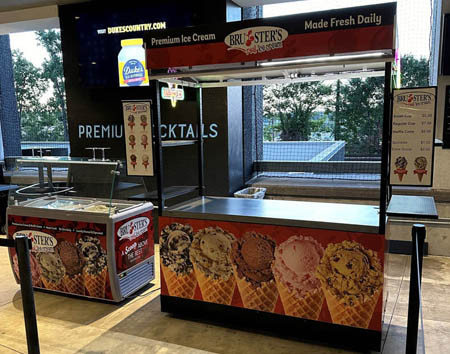
Bruster’s
Ice cream cart
Food Cart Startup Costs: Detailed Breakdown
Food carts offer the lowest barrier to entry in the mobile food industry, making them ideal for first-time entrepreneurs or those testing a concept before scaling up.
Initial Cart Investment: $3,000 – $15,000
New Cart Options:
- Basic push cart: $3,000 – $6,000
- Simple hot dog or coffee cart
- Limited equipment capacity
- Manual operation only
- Standard food cart: $6,000 – $10,000
- Griddle, small fryer, warming units
- Basic refrigeration
- Propane or battery power
- Premium custom cart: $10,000 – $15,000
- Multiple cooking stations
- Advanced refrigeration systems
- Professional branding and design
- Enhanced mobility features
Used Cart Considerations:
- Cost savings: 30-50% less than new
- Hidden risks: Equipment wear, outdated systems
- Inspection costs: $500 – $1,200 for safety/health compliance
- Modification needs: Often require updates to meet current codes
Essential Equipment Costs: $2,000 – $8,000
Cooking Equipment:
- Griddle/flat top: $800 – $2,500
- Deep fryer: $600 – $2,000
- Food warmer: $300 – $800
- Propane tanks and connections: $200 – $500
Refrigeration:
- Under-counter refrigerator: $800 – $2,000
- Freezer unit: $600 – $1,500
- Ice machine: $400 – $1,200
Essential Accessories:
- Hand washing station: $200 – $4000 (required by health codes)
- Fire suppression system: $800 – $2,000 (required for propane use)
- POS system: $300 – $800
- Generator or battery system: $800 – $2,500
Permits and Licensing: $500 – $3,000
Federal Requirements:
- EIN registration: Free (apply directly through IRS)
- Food handler’s certification: $10 – $50 per person
State-Level Costs:
- Business license: $50 – $500 (varies by state)
- Sales tax permit: Usually free, but requires regular filing
- Workers’ compensation insurance: $200 – $600 annually (if hiring employees)
Local Permits (Most Variable):
- Health department permit: $100 – $500 initial, $100 – $300 annual renewal
- Vending permits:
- Daily permits: $25 – $100
- Monthly permits: $200 – $800
- Annual permits: $1,000 – $5,000
- Fire department approval: $50 – $200
- Commissary kitchen agreement: $200 – $600 monthly
Permit Costs by City Size:
- Large cities (NYC, LA, Chicago): $2,000 – $5,000+ annually
- Medium cities: $800 – $2,000 annually
- Small cities/towns: $200 – $800 annually
Insurance Requirements: $800 – $2,500 Annually
Essential Coverage:
- General liability ($1M coverage): $300 – $800 annually
- Product liability: $200 – $500 annually
- Equipment coverage: $200 – $400 annually
- Commercial auto (if using vehicle for transport): $800 – $1,500 annually
Optional but Recommended:
- Business interruption insurance: $300 – $600 annually
- Cyber liability (for payment processing): $100 – $300 annually
Initial Inventory and Supplies: $800 – $2,000
Food Inventory:
- Initial stock: $300 – $800 (1-2 weeks of ingredients)
- Non-perishables: $200 – $500 (condiments, seasonings, packaging)
Operating Supplies:
- Cleaning supplies: $100 – $200
- Paper goods and packaging: $150 – $300
- Propane refills: $50 – $100
- Marketing materials: $100 – $300
Working Capital: $3,000 – $8,000
Monthly Operating Expenses (First 3-6 months):
- Commissary kitchen fees: $300 – $600 monthly
- Daily permit costs: $500 – $2,000 monthly (varies by location)
- Insurance payments: $70 – $200 monthly
- Phone/internet: $50 – $100 monthly
- Fuel/transportation: $200 – $500 monthly
- Maintenance and repairs: $100 – $300 monthly
Cash Flow Buffer: Maintain 3-6 months of operating expenses as working capital to cover:
- Slow sales periods during startup
- Unexpected equipment repairs
- Seasonal fluctuations
- Permit delays or compliance issues
Total Food Cart Startup Investment
Minimum Investment (Basic operation): $9,100 – $12,000
- Used cart with basic equipment
- Essential permits only
- 3-month working capital buffer
Standard Investment (Competitive operation): $15,000 – $22,000
- New standard cart with quality equipment
- Comprehensive permits and insurance
- 6-month working capital buffer
Premium Investment (Market leader): $25,000 – $30,300
- Custom cart with advanced features
- Premium locations and permits
- Full working capital and contingency funds
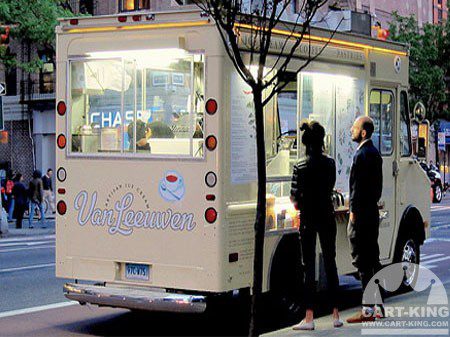
Van Leeuwen
Food Truck
Food Truck Startup Costs: Detailed Breakdown
Food trucks require significantly higher initial investment but offer greater revenue potential and operational flexibility.
Truck and Conversion Costs: $40,000 – $120,000
Used Food Truck Options:
- Basic conversion: $40,000 – $70,000
- Older truck chassis (2010-2015)
- Basic kitchen equipment
- May require immediate repairs
- Turn-key used truck: $70,000 – $100,000
- Newer chassis (2015-2020)
- Fully equipped kitchen
- Recent health department approval
New Food Truck Options:
- Standard new build: $80,000 – $120,000
- New chassis and conversion
- Custom kitchen design
- Warranty coverage included
- Premium custom build: $120,000 – $200,000+
- High-end chassis and equipment
- Advanced kitchen systems
- Premium branding and design
Kitchen Equipment: $15,000 – $40,000
Essential Cooking Equipment:
- Commercial range/griddle: $3,000 – $8,000
- Deep fryers: $2,000 – $5,000
- Oven (convection): $2,000 – $6,000
- Refrigeration systems: $3,000 – $8,000
- Freezer units: $2,000 – $5,000
- Food prep tables: $1,000 – $3,000
Advanced Systems:
- Exhaust/ventilation system: $3,000 – $8,000
- Fire suppression system: $2,000 – $5,000
- Water and waste systems: $2,000 – $4,000
- Electrical systems: $1,000 – $3,000
Food Truck Permits and Insurance: $3,000 – $8,000
Additional Truck Requirements:
- Commercial driver’s license: $50 – $200
- DOT registration: $300 – $800
- Commercial vehicle inspection: $100 – $300
- Mobile vendor permits: $1,000 – $3,000 annually
Enhanced Insurance Coverage:
- Commercial auto insurance: $2,000 – $5,000 annually
- Higher liability limits: $800 – $1,500 annually
- Equipment coverage: $500 – $1,200 annually
Working Capital for Food Trucks: $10,000 – $25,000
Food trucks require larger working capital due to:
- Higher daily operating costs
- More complex permit requirements
- Greater maintenance and fuel expenses
- Longer time to establish profitable routes
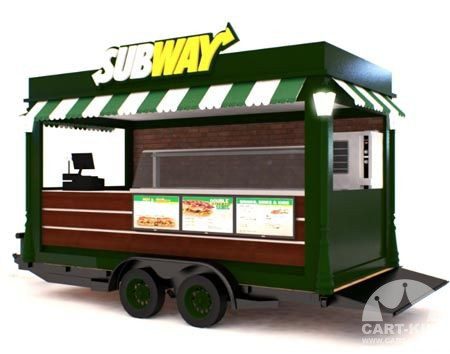
Subway
Concession trailer
Concession Trailer Startup Costs
Concession trailers offer a middle ground between carts and trucks, ideal for event-focused businesses.
Trailer Investment: $15,000 – $50,000
Basic Concession Trailer: $15,000 – $25,000
- Standard size (8′ x 16′)
- Basic equipment package
- Manual systems
Premium Event Trailer: $35,000 – $50,000
- Large size (8′ x 20′ or larger)
- Professional kitchen equipment
- Advanced electrical and plumbing
Additional Trailer Costs
Tow Vehicle Requirements: $15,000 – $40,000
- Must be rated for trailer weight
- Commercial insurance required
- Additional licensing may be needed
Setup Equipment: $2,000 – $5,000
- Leveling jacks and stabilizers
- External electrical connections
- Canopies and outdoor seating
Hidden Costs Most Entrepreneurs Miss
Commissary Kitchen Requirements: $2,400 – $7,200 Annually
Most jurisdictions require commercial kitchen access:
- Daily rental: $15 – $30 per hour
- Monthly membership: $200 – $600
- Storage fees: $50 – $200 monthly
- Utility surcharges: $50 – $150 monthly
Daily Operating Permit Costs: $6,000 – $25,000 Annually
If relying on daily permits:
- Business district permits: $50 – $100 daily
- Event permits: $100 – $500 per event
- Annual calculation: $50 x 250 days = $12,500
Credit Card Processing: 2.5% – 3.5% of Revenue
With average food cart revenue of $150,000:
- Annual processing fees: $3,750 – $5,250
- Equipment rental: $300 – $600 annually
- Setup and integration: $200 – $500
Maintenance and Repairs: 5% – 10% of Equipment Value
For $20,000 in equipment:
- Annual maintenance: $1,000 – $2,000
- Emergency repairs: $500 – $1,500
- Equipment replacement: Budget 20% annually
Marketing and Branding: $1,000 – $5,000
Essential Marketing Costs:
- Logo design and branding: $300 – $1,500
- Cart wrap/signage: $1,000 – $3,000
- Website development: $500 – $2,000
- Social media setup: $200 – $500
- Grand opening promotion: $500 – $1,000
Financing Options for Food Cart Startups
Traditional Financing
SBA Loans:
- SBA Express Loans: Up to $500,000, 7-11% rates
- Microloans: Up to $50,000, 8-13% rates
- Requirements: Good credit (650+), business plan, collateral
Bank Financing:
- Business term loans: 6-15% rates
- Equipment financing: 8-15% rates, equipment as collateral
- Business lines of credit: 10-20% rates, flexible access
Alternative Financing
Equipment Financing:
- Rates: 8-15% depending on creditworthiness
- Terms: 3-7 years
- Down payment: 10-20% typically required
- Benefits: Equipment serves as collateral
Revenue-Based Financing:
- Cost: 2-10% of monthly revenue for 12-36 months
- No collateral required
- Faster approval process
- Good for businesses with seasonal fluctuations
Crowdfunding:
- Kickstarter/Indiegogo: Reward-based funding
- GoFundMe: Donation-based funding
- Success rates: 15-20% of campaigns reach goals
- Marketing benefit: Builds customer base before launch
Personal Financing Options
Personal Savings:
- Most common: Used by 70% of food cart startups
- No interest costs
- Maintain full ownership
- Risk: Personal financial exposure
Friends and Family:
- Informal structure: Often lower interest rates
- Flexible terms
- Maintaining relationships: Clear agreements essential
Retirement Account Funding:
- ROBS (Rollover for Business Startups): Use 401(k) funds
- No early withdrawal penalties
- Complex structure: Requires professional setup
Cost-Saving Strategies
Smart Equipment Purchases
Buy Used When Appropriate:
- Refrigeration equipment: Often 50% savings
- Older POS systems: Basic functionality for less
- Cart modifications: Cheaper than custom builds
Lease vs. Buy Analysis:
- Lease benefits: Lower upfront costs, maintenance included
- Buy benefits: Equity building, no monthly payments
- Break-even: Usually 3-4 years
Permit Cost Optimization
Multi-Location Strategy:
- Spread permit costs: Across multiple revenue streams
- Negotiate annual rates: Often 20-30% cheaper than daily
- Group applications: Some cities offer discounts
Event Circuit Planning:
- Annual event passes: Bulk pricing available
- Early registration: Discounts for advance booking
- Partner with other vendors: Share permit costs
Operational Cost Reduction
Commissary Kitchen Sharing:
- Split costs: With other food cart operators
- Off-peak hours: Often 20-30% cheaper
- Membership discounts: Annual vs. monthly rates
Insurance Bundling:
- Multiple policies: Same carrier for discounts
- Industry associations: Group rates available
- Higher deductibles: Lower premium costs
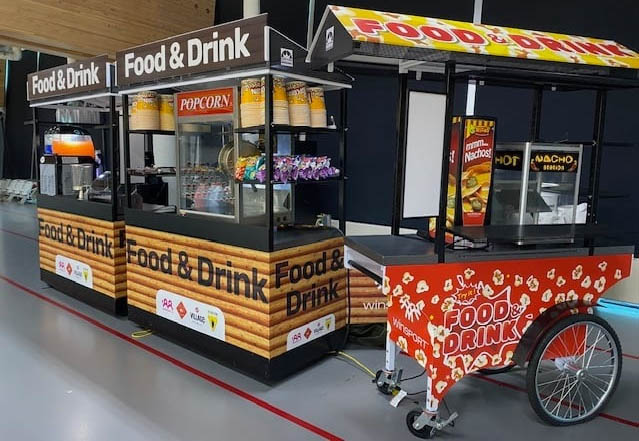
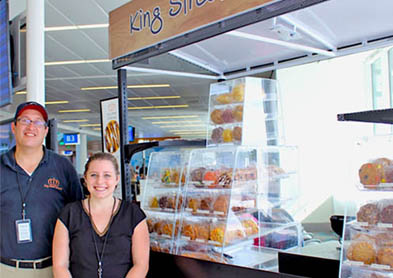
Winsport Catering
Food cart and kiosks
Financial Planning and Cash Flow Management
Revenue Projections
Conservative Estimates (First Year):
- Daily sales: $200 – $400
- Operating days: 200 – 250 annually
- Annual revenue: $40,000 – $100,000
Realistic Expectations (Year 2-3):
- Daily sales: $400 – $800
- Operating days: 250 – 300 annually
- Annual revenue: $100,000 – $240,000
Break-Even Analysis
Food Cart Break-Even Example:
- Fixed costs: $2,000 monthly
- Variable costs: 65% of sales
- Break-even: $5,714 monthly sales
- Daily break-even: $286 (20 operating days)
Seasonal Cash Flow Planning
Peak Season (May-October):
- Higher daily sales: $500 – $1,000
- Build cash reserves: 30-40% of peak earnings
- Equipment maintenance: Schedule during peak revenue
Slow Season (November-April):
- Reduced operations: 50-70% of peak sales
- Focus on events: Holiday markets, indoor venues
- Cost reduction: Minimize fixed expenses
Return on Investment Expectations
Food Cart ROI Timeline
Year 1: Break-even to 10% profit margin
- Focus: Establishing customer base
- Challenges: Learning curve, permit navigation
- Investment recovery: 50-70% of initial investment
Year 2: 15-20% profit margin
- Optimization: Streamlined operations
- Growth: Expanded locations or hours
- Investment recovery: 80-100% of initial investment
Year 3: 20-25% profit margin
- Expansion: Additional carts or services
- Market leadership: Established brand recognition
- Full ROI: Complete investment recovery plus profit
Industry Benchmarks
Successful Food Cart Metrics:
- Food cost: 28-35% of sales
- Labor cost: 25-35% of sales (including owner salary)
- Gross profit margin: 65-75%
- Net profit margin: 15-25%
Warning Signs:
- Food cost above 40%: Menu pricing or portion control issues
- Daily sales below $300: Location or marketing problems
- No profit after 18 months: Fundamental business model issues
Wrapping it up: Making Smart Investment Decisions
Starting a food cart business requires careful financial planning and realistic expectations. While the lower barrier to entry makes it accessible to many entrepreneurs, success depends on adequate capitalization and strategic cost management.
Key Takeaways for Financial Planning:
- Budget Conservatively: Add 20-30% to all cost estimates for unexpected expenses
- Maintain Working Capital: 6 months of operating expenses minimum
- Start Simple: Begin with basic equipment and upgrade based on success
- Track Everything: Monitor daily costs and revenue from day one
- Plan for Seasonality: Build cash reserves during peak months
Investment Decision Framework:
Choose Food Carts If:
- First-time entrepreneur
- Limited startup capital ($10,000 – $30,000)
- Testing a concept before scaling
- Focusing on simple, high-margin items
Choose Food Trucks If:
- Experienced in food service
- Substantial startup capital ($75,000+)
- Want full kitchen capabilities
- Planning rapid scaling
Choose Concession Trailers If:
- Event-focused business model
- Seasonal operation preference
- Want more space than carts but less investment than trucks
Success in the food cart industry comes from matching your investment level with realistic revenue expectations and maintaining disciplined financial management throughout your startup phase.
Ready to develop your complete business plan? Check out our guide on How to Start a Food Cart Business: Complete 2025 Guide for comprehensive startup planning, or explore our detailed guide on Food Cart Permits and Licensing: State-by-State Guide to understand your regulatory requirements.
Need help choosing the right food cart for your budget and business goals? Cart-King offers a complete range of customizable food carts designed to maximize your startup investment while meeting all health and safety requirements.

What you can read next